Case Study · Mobile · 0 → 1 · Japan
Designing a driver app for scan, memorize, act.
A 0→1 last-mile delivery app for Espoirer's Japanese couriers — built for drivers who don't read the screen, they glance at it.
Scope of work
- Product
- Role
- Methods
- Focus
- Outcome
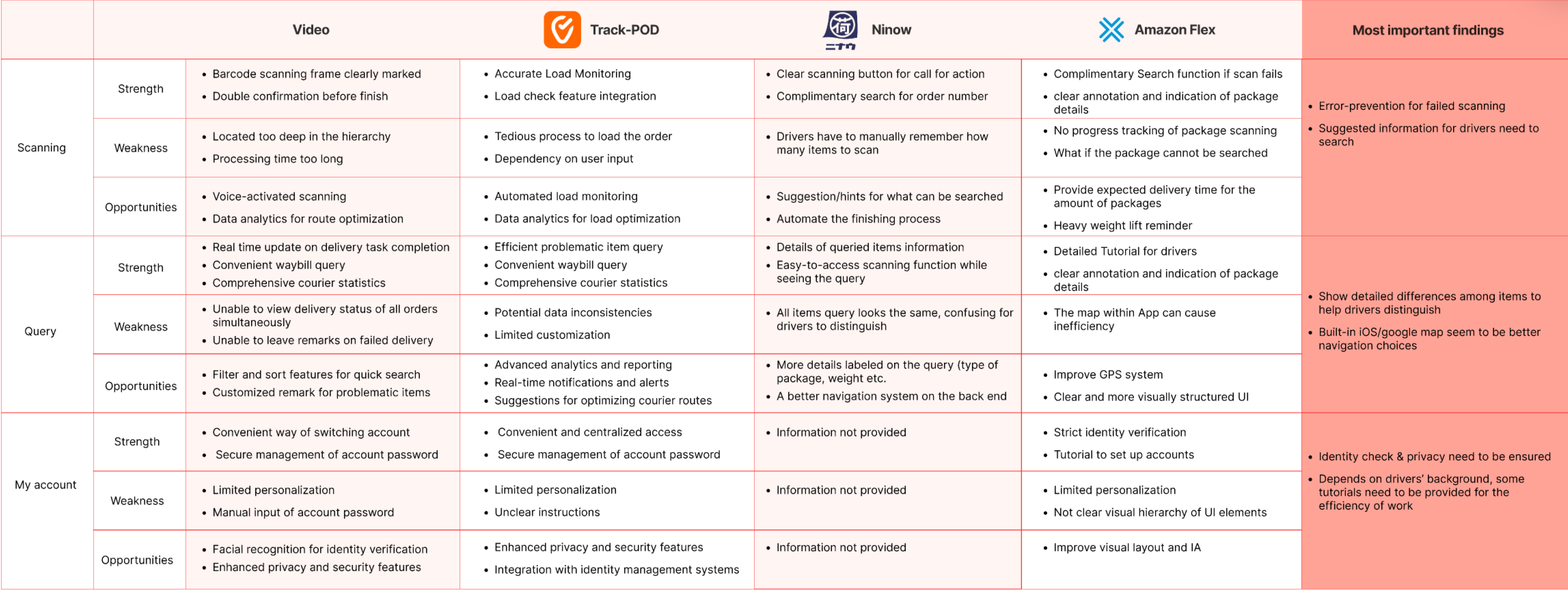
Key insight · 8 contextual interviews
Drivers don't read the app — they scan, memorize, and act.
Field observation · ride-along with 8 Japanese couriers
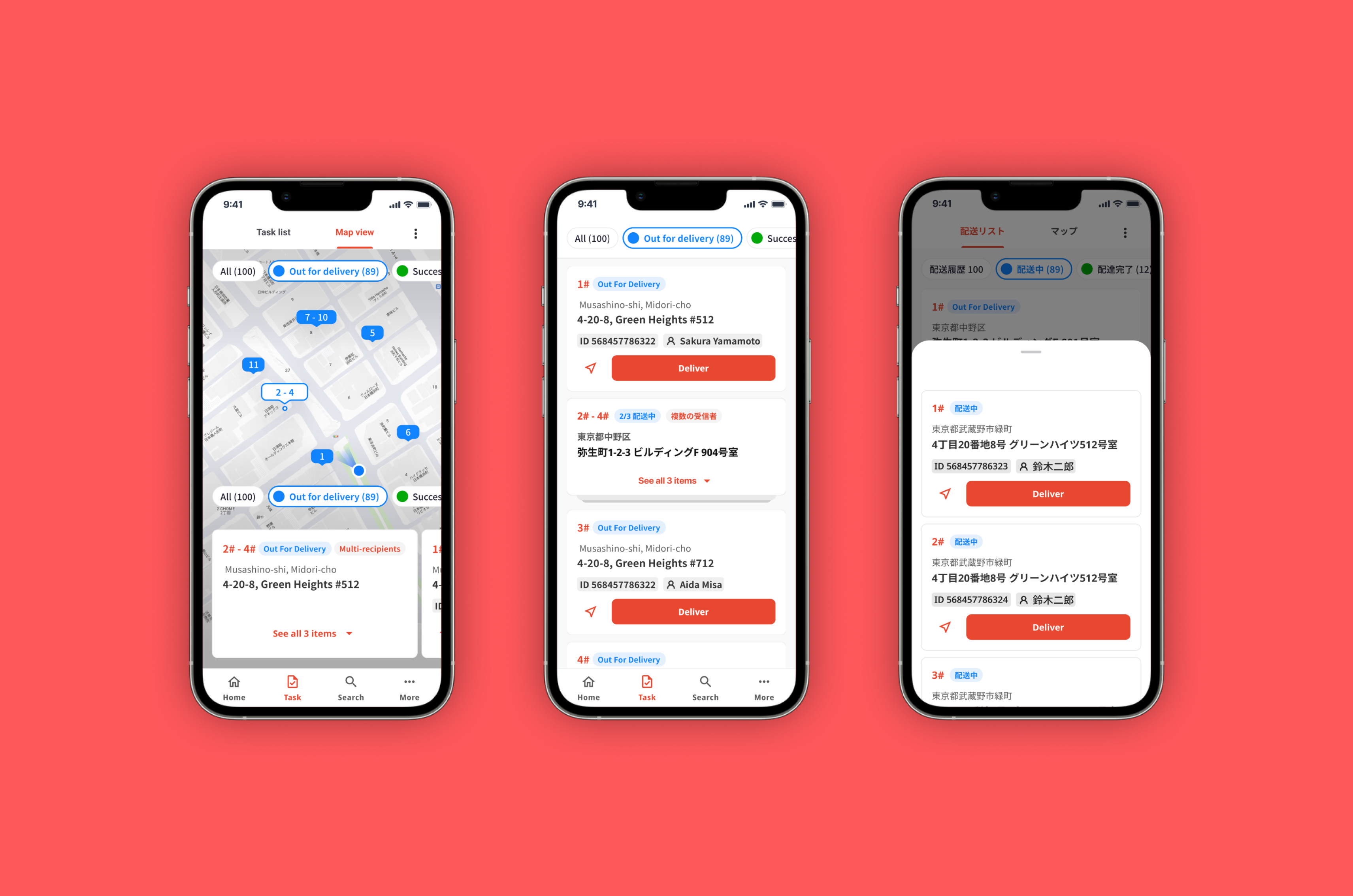
The redesign
From a paper-equivalent screen to a scannable hierarchy.
The original list — paper translated to phone
Scannable cards built around the driver's eye-path
Information architecture
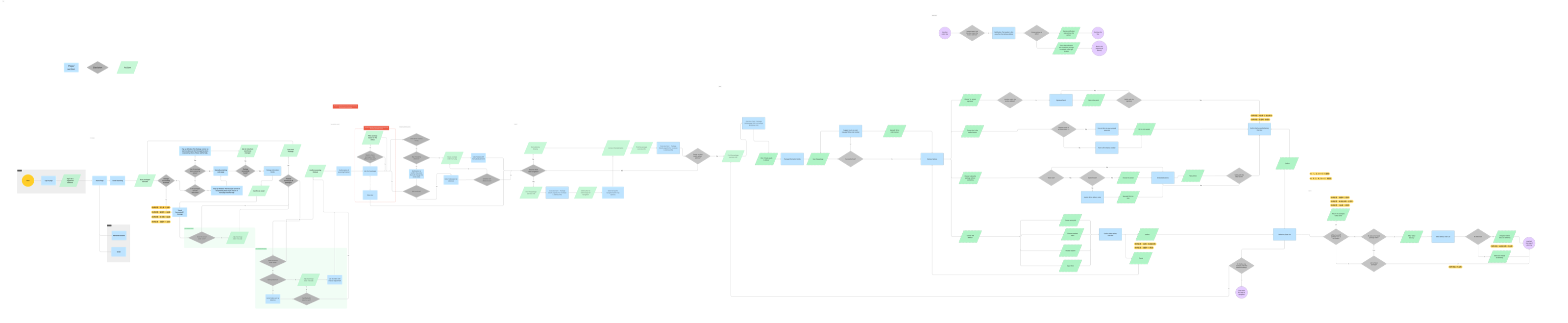
The nested complexity behind each delivery.
A single order isn't an order — it's a chain. Different recipients within the same room, different rooms within the same building, different buildings within the same area, all needing to resolve to one card the driver can act on.
Highlighted nodes show one driver's actual delivery to Yamamoto-san at building 4-2-3, room 203 — two of the five packages routed to the same physical address.
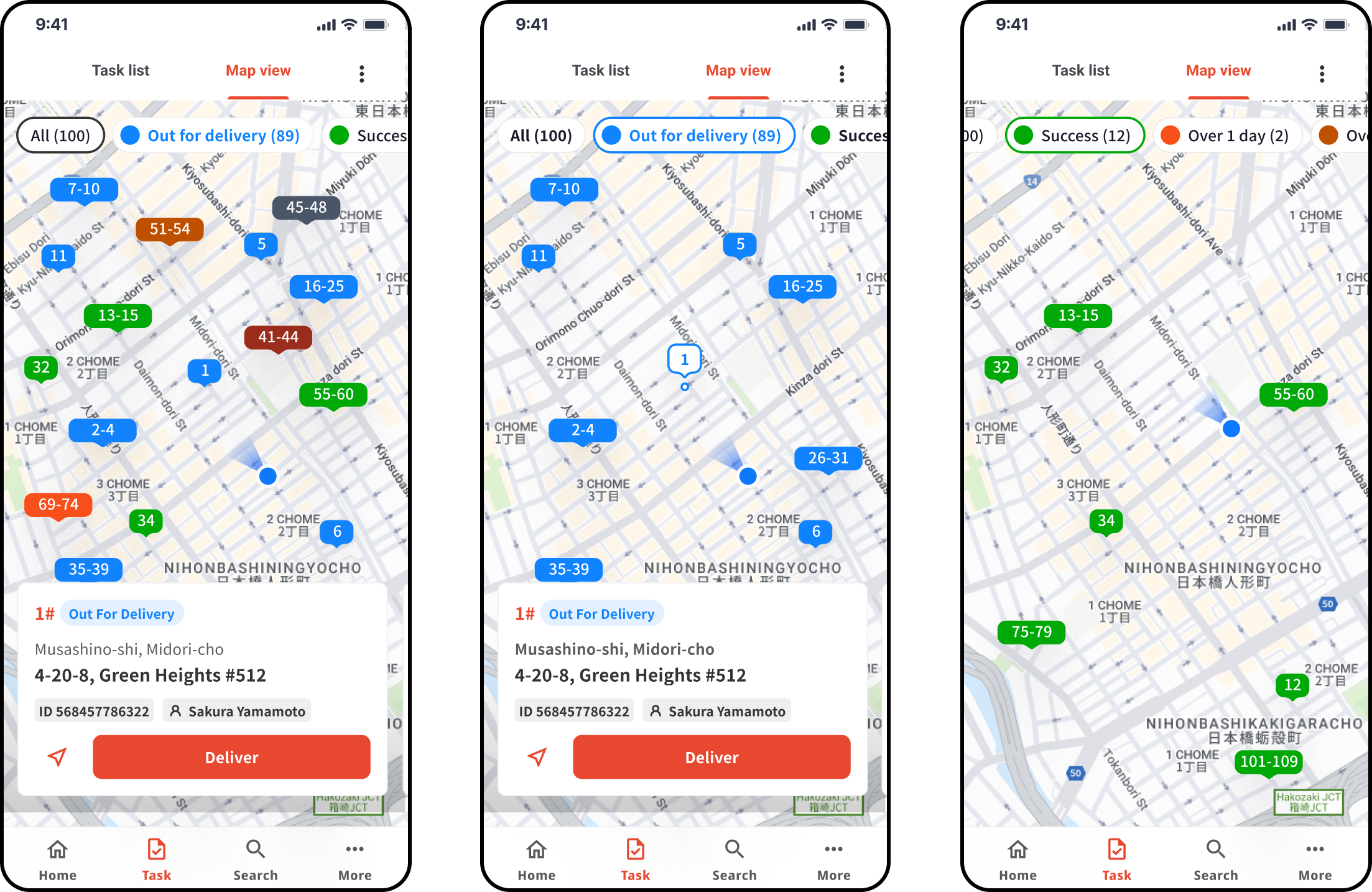
In production
Screens drivers actually use, every shift.
Localization
Built around how Japanese addresses actually work.
Japan's addresses go area → block → building → room — the opposite hierarchy from Western "house number, street". Forcing Western patterns onto a Japanese delivery list breaks every driver's mental model.
Address rendering, typography balancing kanji + Latin glyphs, and a card system that treats the building as the primary anchor — not the street.
Western pattern
123 Main Street, Apt 4B
Brooklyn, NY 11201
Japanese pattern · used by Espoirer
渋谷区 桜丘 4-2-3 · 203
Shibuya-ku · Sakuragaoka · Block 4-2-3 · Room 203
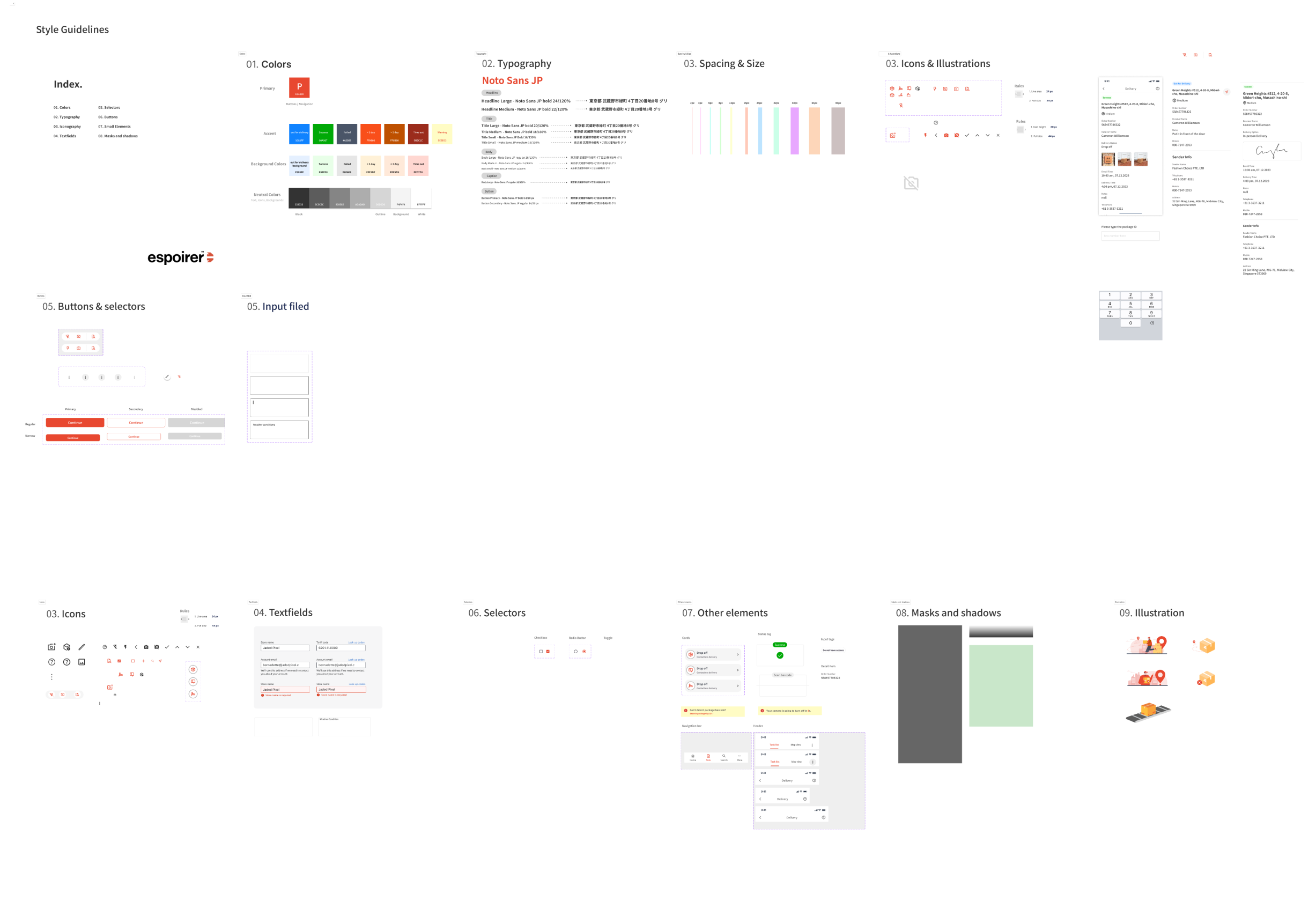
Design system
One kit, built for kanji and Latin side by side.
Results
Measurable impact on daily operations and growth.
Delivery success
92% → 97%
Order volume
more than doubled
Shipped from scratch
on iOS & Android
Takeaways
B2B logic is a different shape of complexity.
The hard part of a driver tool isn't any single screen — it's keeping data and process correct end-to-end, across features owned by different teams. Every intersection point is a place the product can silently break.
Example — when a driver batch-scans packages ahead of arrival, location accuracy drops and the system flags an error. Should the system decide, or should the driver get the authority to override? Decisions like this live in no wireframe — and they shaped more of the product than the screens did.
Designing a 0→1 product means designing the seams — the handoffs between your surface and everyone else's. That's where trust is kept or lost.